
Piezoelectric ceramics have many military applications including active sonar, hydrophones, accelerometers, fuses and triggers for munitions, sensors for military vehicles, and motors and actuators in UAVs and satellites. Traditional piezoelectric device fabrication uses cutting technology such as scribing, broaching, sawing, or etching to produce devices with complex geometric shapes. Cutting processes limit design options and the mechanical stress of cutting causes grain loss and strength degradation.
Additive manufacture (AM) provides an alternative to subtractive cutting processes. AM technology provides the ability to manufacture complex structures with accurate control of thickness and the precise control of structure needed for microminiature devices. In addition, AM also offers the opportunity to use 3D design to improve electromechanical response, enhance piezoelectric output, and increase device sensitivity.
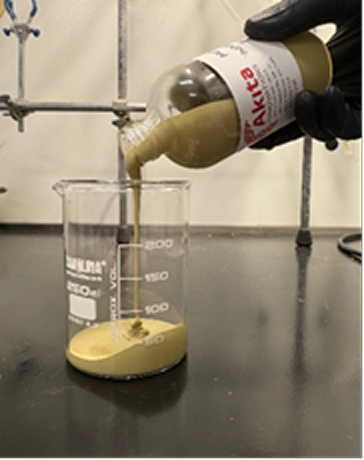
Akita is developing resin systems that enable digital light processing additive manufacture (DLP AM) of textured piezoelectric ceramics. DLP AM offers significant advantages in surface quality and resolution which are critical to the manufacture of piezoelectric components. These materials enable:
- Manufacture of high-performance piezoelectric materials for sonar and acoustic transduction that offer improved directional response, stronger electromechanical coupling, and reduced loss compared to conventional ceramics.
- Production of piezoelectric components with complex geometries, thin features, and engineered texture orientation that cannot be produced through traditional ceramic pressing or machining.